Craft
Sculpting The Foot, Block-in to Finish
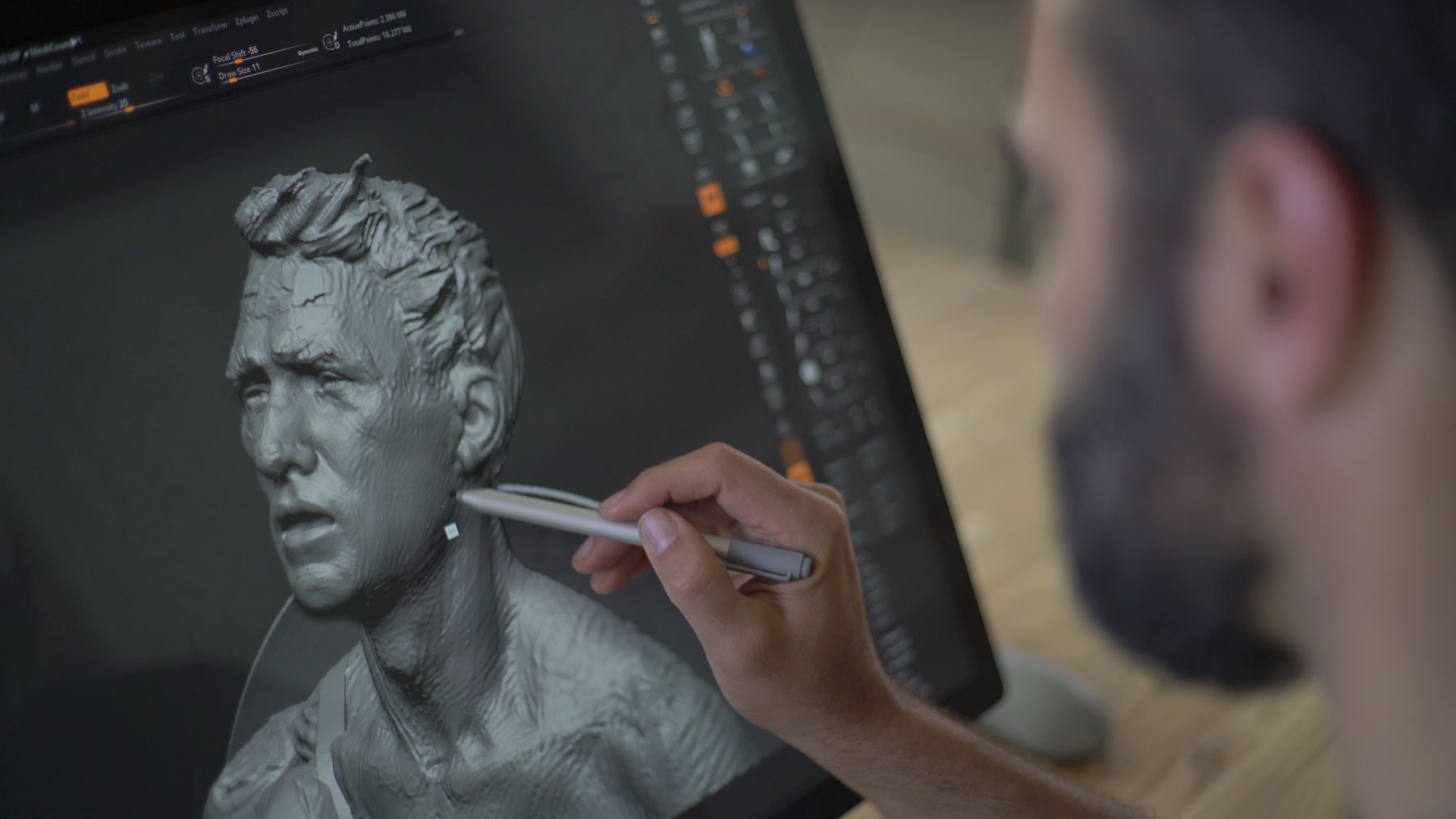
This one-minute reel starts out with a very primitive construction of the foot — blink and you’ll miss it.
Then sculpting begins by separating out the bony masses of the ankle, the tarsals and metatarsals, but you can see that I’m also going in and defining smaller volumes that may not correspond to any specific anatomy, as well.
I’ve since refined my teaching to be much more clear when I move from one sculpting phase to another, but when I’m on my own and just having fun, the different stages tend to flow into each other.
Either way, the first 17 seconds of this reel are what I’d call a structural block-in. There are anatomical notations; there are construction notes; there are notes on planes and plane changes.
The structural phase is really kind of a notational phase. I’m just almost writing notes for what’s eventually going to be there.
Then I start with line work, and once I get into the line work and start defining smaller forms, this moves more into the tertiary form phase. Again, my sculpting has evolved a bit, and now I call this phase the walnut phase, and I’m much clearer about going in and finding tertiary forms.
However, in here you’ll see that I’ll draw lines in, then use the rake brush to define the curvature and the volume, then smooth it out, then use the rake brush again to establish planes and volumes — and rinse and repeat that quite a bit to start to develop the surface finish.
This method of sculpting is very near and dear to my heart, and it’s very freeform. It’s very hard to teach because there’s so much knowledge included even in the early stages of the block-in, but it’s really such a joy to sit and watch these decisions I made and how the rake brush works with the smooth brush, and then the clay buildup brush, and on and on.
Self-paced · lifetime access
Anatomy for Artist
The human figure taken apart and rebuilt — every muscle built from the skeleton up in ZBrush, at your own pace, plus a live critique every month.
Start the course →Primary Forms
Get the next note in your inbox.
Anatomy breakdowns and sculpting method, sent when there's something worth sending. No noise.